To test your reaction time, tap the screen as fast as you can when it flashes, over several trials, and average the results. The average adult reaction time is about 230 milliseconds in lab tests and roughly 50 to 100 ms more on a phone. ReflexIQ in CEMP Life runs five trials at random intervals, discards your fastest and slowest, and averages the middle three. Under 400 milliseconds is rated Very Good, 400 to 800 ms Average, and 800 ms or more means Take a Rest. It runs entirely on your phone with no internet.
Reaction time at a glance
- Typical visual reaction time for a healthy adult is roughly 200 to 300 ms on a well-designed test
- Phone tests add a little screen and touch delay, so scores read slightly higher
- Sleep loss, alcohol, illness and fatigue slow you measurably
- Track your own baseline; compare yourself with yourself
How to test your reaction time with your phone
- Open ReflexIQ in the Health and Wellness pod.
- Tap Start Test and rest your finger near the screen.
- When the screen flashes green, tap as fast as you can. The flash comes at a random moment so you cannot anticipate it.
- Repeat for five trials. ReflexIQ drops the fastest and slowest and averages the middle three.
- Read your rating and the trial breakdown.
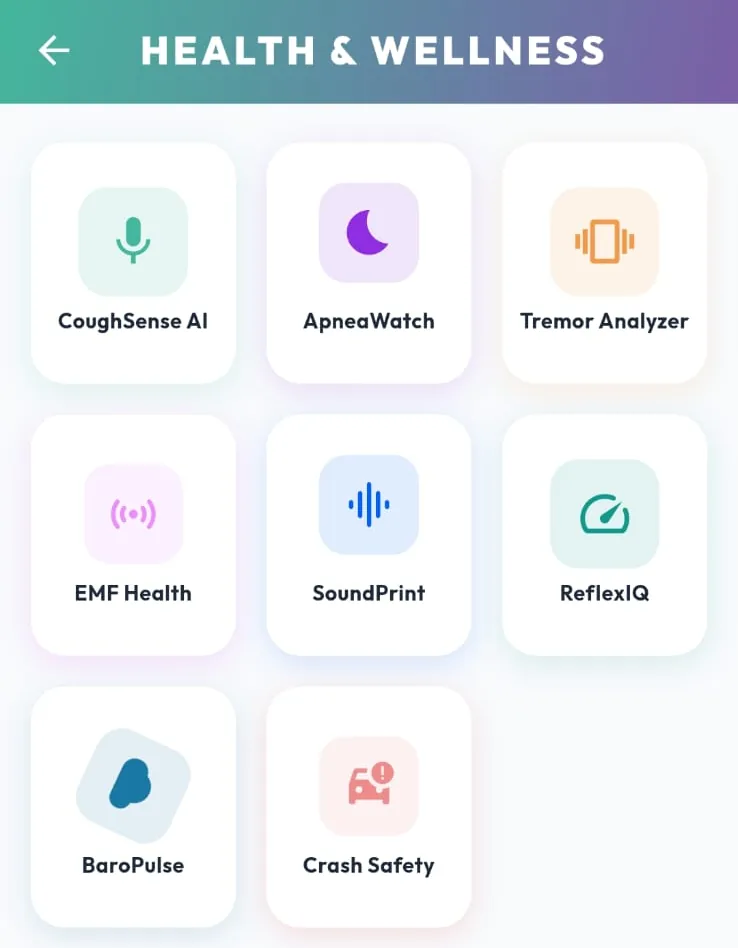
Dropping the extremes removes the lucky guess and the moment you blinked, which makes the average more trustworthy than a single tap.
What is a good reaction time?
| ReflexIQ average | Rating | What it suggests |
|---|---|---|
| Under 400 ms | Very Good | Alert and responsive |
| 400 to 800 ms | Average | Within normal range; a break may help if you feel tired |
| 800 ms or more | Take a Rest | Noticeably slow; avoid driving or risky tasks until rested |
The most useful number is not the rating but the change. If your usual score is 330 ms and today it is 450 ms, something is different.
Test your reflexes now. Works offline.
CEMP Life puts 20+ SI tools in one app: calorie counter, food and allergen scanner, recipe maker, wellness sensors, crash detection, car diagnosis, contract checker, receipt scanner and a full creator studio. No account needed. Nothing stored.

4-day free trial on Google Play. Cancel any time.
What is the average reaction time by age?
In a study of 1,469 adults aged 18 to 65, the average simple visual reaction time was about 231 milliseconds in lab conditions, and it slowed by roughly 5 ms per decade. Slowing becomes steeper after about 60, and older adults also vary more from one try to the next.
| Age | Typical lab reaction time | On a phone tap test |
|---|---|---|
| Teens (15 to 19) | About 220 to 240 ms | About 270 to 340 ms |
| 20 to 29 | About 220 to 230 ms | About 270 to 330 ms |
| 30 to 39 | About 225 to 235 ms | About 275 to 335 ms |
| 40 to 49 | About 230 to 240 ms | About 280 to 340 ms |
| 50 to 59 | About 235 to 245 ms | About 285 to 345 ms |
| 60 and over | About 245 ms and up, more variable | About 300 ms and up |
Phone and browser tests add roughly 50 to 100 ms of screen and touch delay, which is why the phone column is higher. Compare yourself with people your age on the same kind of test, and above all with your own baseline.
What slows your reaction time?
- Sleep loss: one of the strongest effects, and it accumulates
- Alcohol and some medicines, especially sedating ones
- Illness and fever
- Fatigue after long shifts, travel or hard training
- Distraction: a phone notification mid-test will show
Who should track reaction time?
- Drivers before a long trip or after a short night
- Athletes and gamers monitoring readiness and recovery
- Shift workers checking alertness across the week
- Older adults keeping an eye on cognitive responsiveness over months
- Anyone recovering from illness who wants a simple sign of getting back to normal
How to improve your reaction time
Sleep is the biggest lever. Regular exercise, staying hydrated, cutting alcohol and practising fast-response activities (ball sports, rhythm games) all help. Test at the same time of day so the comparison is fair.
The honest limits
ReflexIQ is a wellness tool and is not a clinical assessment. Phone screens and touch sensors add a small delay, so compare scores from the same phone. If your reactions are persistently slow with other symptoms such as confusion or weakness, see a doctor. For more ways to understand your body with your phone, read the best health and wellness app and why are my hands shaking?
Test your reflexes now. Works offline.
CEMP Life puts 20+ SI tools in one app: calorie counter, food and allergen scanner, recipe maker, wellness sensors, crash detection, car diagnosis, contract checker, receipt scanner and a full creator studio. No account needed. Nothing stored.
4-day free trial on Google Play. Cancel any time.